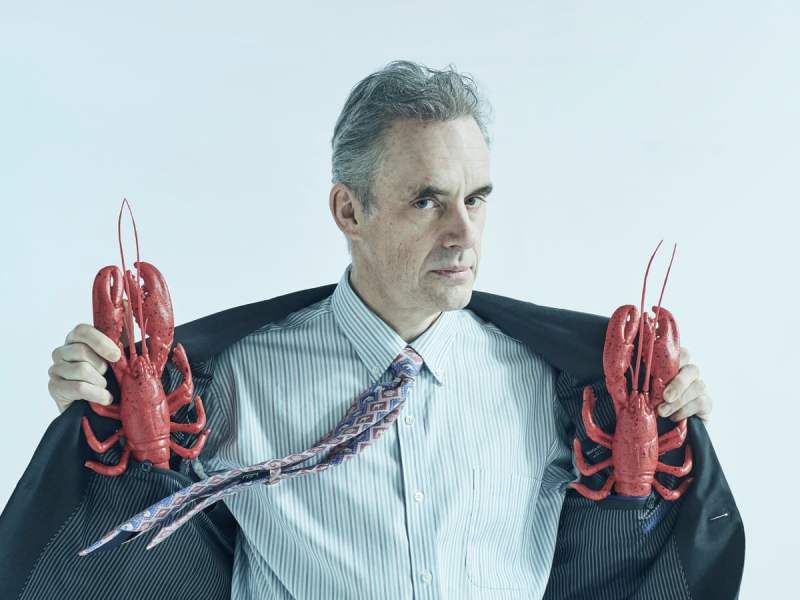
Jordan Peterson is one of the most popular psychologist of our time. You can hate him or love him but his book, “12 rules for life” has some interesting stuff.

During the first pages of chapter one, Peterson begins writing about our similarities with lobsters, birds and dolphins. Although he quoted the primatologist, Frans De Waal (page 10). I must admit that I disliked Peterson’s fascination with these crustaceous. Why lobsters? I asked myself. If we already know that we can learn a lot about our behaviour from other primates such as Chimpanzees and Bonobos why waste time comparing Homo Sapiens’ with something like a lobster? I tried to be more tolerant with the idea that we can learn something from dolphins because they are mammals like us and they are extremely intelligent, like most of us, but I did not want to accept the fact that we can learn a lot from other non human animals such as birds …. or lobsters!

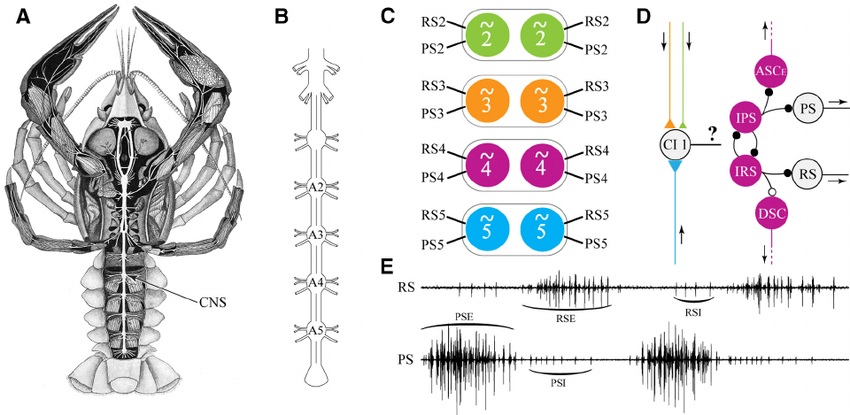
How naive I was! but it is part of the process of learning. The reason why Peterson prefers to use lobsters as a way to explain humans’ hierarchies it is because their nervous systems are comparatively simple, with large, easily observable neurons. Because of this, scientist have been able to map the neural circuitry of lobsters very accurately. This has helped us understand the structure and function of the brain and behaviour of more complex animals, including human beings (Peterson, 2018).
In fact, lobsters are not the only animals in the ocean with simple nervous systems. According to Jaak Panksepp professor emeritus in Psychobiology, there is a sea slug called California sea hare (Aplysia Californica) that fascinates scientists because, just like lobsters, it has a simple nervous system of about 20,000 nerve cells and a set of defensive reflexes that have been used effectively to study the neuronal basis of learning, especially classical conditioning.

For example, touching the siphon or gill leads to withdrawal of these organs, but this response habituates rapidly. If, however, this type of conditioned stimulus (touch) is paired with electric shock to the tail, the animal develops a conditioned learning has been most extensively studied in this creature, there has been some success in training these animals to also exhibit instrumental learning (Panksepp, 2005).
Why this is relevant to psychology? It is really necessary to study other non human animals in order to understand more about humans’ psyche? Well, I had those questions when I started to read Peterson’s book and was in other book “Our Inner Ape” by Frans de Waal that I finally understood the importance of study other animals in order to understand more about ourselves.

De Waal, famous Dutch primatologist who worked in the department of Psychology at Emory University in Atlanta, explains why we can learn not only from other primates but from birds and fish too: “Birds and fish have always held and appeal for me, so that even now my offices and labs have fish tanks, which students are sometimes asked to look after. They seek me out to learn about primates, and the I spring the fish on them!”
De Waal continues explaining the importance of watch the behaviour of other animals in order to understand humans’ conduct and not only learn exclusively about human beings “Having been trained in anthropocentric disciplines, such as psychology and anthropology, they laugh (his students) at the possibility that slippery animals at the bottom of the evolutionary scale could be of interest. But they have much to teach us. And as for every creature on earth, the urge to reproduce is at the core of their existence (De Waal, 2005).
Overall, De Waal and Panksepp arguments helped me to understand more Jordan Peterson’s attitude towards lobsters but at the same time to realise that a lot of people in psychology (myself included) had an anthropocentric education at University, where a lot of subjects are about the study of human beings exclusively without considering our similarities with other animals. Certainly, it is fundamental to analyze the scientific studies in humans’ and the investigations about human brain.
However, it is also important to encourage students in psychology to analyze deeply the behaviour and neurological systems in other animals as well. In addition, we should not only focus our attention in primates because different species in animal kingdom have a lot to teach us about our own behaviour and what we can learn from them in order to have healthier individuals in our societies. Without mention the benefits to be closer to nature and feel more empathy and compassion towards other animals.
References
Smarandache-Wellmann, C. Weller, C. & Mulloney, B. (2014) Mechanisms of coordination in distributed neural circuits: Decoding and integration of coordinating information. ResearchGate, The Journal of Neuroscience: The official journal of the society for Neuroscience. https://www.researchgate.net/figure/Organization-of-the-neural-circuits-that-control-crayfish-swimmerets-A-The-crayfish_fig1_259767833
De Waal, F. (2005) Our Inner Ape. Penguin Group.
Peterson, J. (2018) 12 rules for life. An antidote to chaos. Penguin Books.
Panksepp, J. (2005) Affective Neuroscience. The foundation of human and animal emotions. Oxford University Press.
Jordan Peterson Photograph [Photograph], by Phil Fisk. The observer, 2018. https://www.theguardian.com/global/2018/jan/21/jordan-peterson-self-help-author-12-steps-interview
Aplysia Californica [Photograph] by In-Depth Images California. Underwater kwaj, 2008. http://www.underwaterkwaj.com/nudi/california/c010.htm
Frans De Waal [Photograph], by Catherin Marin, Library of Congress. https://www.loc.gov/events/2019-national-book-festival/authors/item/n82002623/frans-de-waal/
 Sapiens Lara