Artemis II: farther from Earth, closer to ourselves.

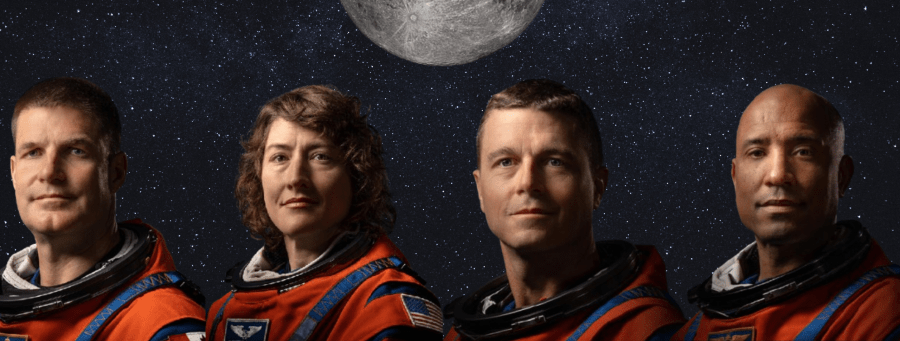
Watching the crew of Artemis II break down in tears just minutes after surpassing Apollo 13’s record becoming the humans who have traveled farthest from Earth, moved me deeply. We can try to explain the evolution of human emotion, or why we become overwhelmed when we reach something profoundly meaningful. But the truth is simpler and more extraordinary: we are witnessing something entirely new in the evolutionary history of life on Earth.

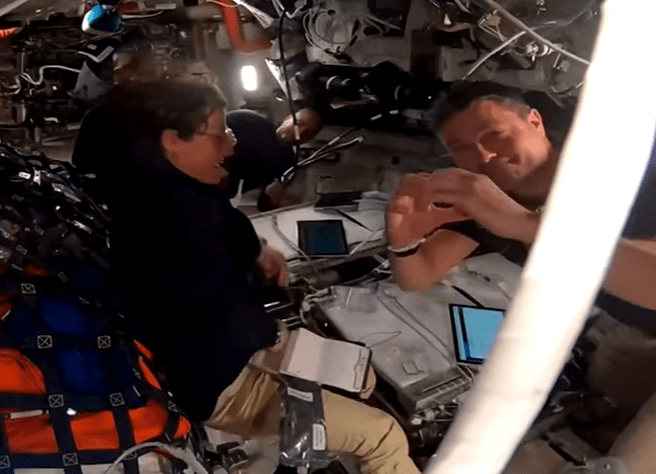
Artemis II crew shares an emotional embrace after surpassing Apollo 13’s long standing record on traveling farther from Earth than any other human in history. Screenshot taken from NASA Official YouTube Channel.

When we heard Commander Wiseman’s voice crack over NASA’s official YouTube broadcast, speaking from inside Orion, it was imposible not to feel the weight of that moment. And seeing the rest of the crew become emotional as well, embracing each other in group hug, was not only fascinating, it was beautiful.

What makes this moment so powerful is that the Artemis II crew may have experienced thoughts that no human being in history has ever had before: the realization of being farther from home than anyone who has ever lived: What were they thinking? what exactly were they feeling? were they thinking about their families, about one particular person, or about the obstacles and sacrifices that brought them to that historic point?

We don’t know yet. We will have to wait until these brave astronauts are ready to tell us what they truly felt in that historic moment. But even without their words, one thing is already clear: simply being that far from Earth, and that close to our natural satellite, is an experience that only a tiny fraction of humanity ever has, or ever will, know. Some might argue that this is not different from what Olympic medalists, Nobel lauretes, or world leaders feel when they reach the summit of their fields. And while those achievemets are undeniably extraordinary, what we are witnessing here belongs to a different category altogether.

This is not only about success, prestige, or recognition. It is about human presence in a place where almost no human has ever been. But it’s also about the living world of Earth extending itself, however briefly, into the silence of deep space. To be suspended in deep space, looking back at Earth while traveling near the Moon, is not simply an achievement, it’s a profoundly new experience for a species shaped by Earth and everything that made its survival possible. And the fact that the rest of us can witness the raw emotional reaction of these four astronauts, in real time, through the power of the Internet, it remarkable in itself.

Seconds later, Canadian mission specialist Jeremy Hansen forms a heart with his hands toward Orion’s onboard camera, with mission specialist Christina Koch next to him and pilot Victor Glover in the back. Screnshoot taken from NASA official YouTube Channel.

Artemis II is a major scientific and technological milestone. It will help us better understand the Moon, deep space operations, and the systems that may carry humans (and other species) farther into the cosmos in the years ahead. But it is also opening a new chapter in a subject that may become increasingly important in the decades to come: the emotional and psychological experience of human beings in deep space.

Most of us may never have the priviledge of traveling to the Moon as these astronauts have. At least not yet. But we’re living through a privilege of our own, one of our ancestors only imagined in their dreams: to witness members of our own species brought to tears after becoming the first Homo Sapiens to travel farther from home than anyone before them.

And perhaps that is what makes this moment so moving. Because beyond the engineering, beyond the mission profile, and beyond the history books, what we are really witnessing is not just humanity confronting the immensity of its own existence, but the result of a long evolutionary chain. One that includes not only our species, but the countless forms of life that made our survival possible. This, then, is not solely a human achievement, but part of a broader story: the expansion of life from Earth into space.

Dogs vs. Loneliness. Can we really beat loneliness by adopting a dog?

Disclaimer: This article is for educational purposes only and is not a substitute for professional guidance.

Photo by Cynthia Smith.

Dogs and humans created a special bond 15,000 years ago, although some scientists believe that dogs’ domestication began between 20,000 and 40,000 years ago (Briggs, 2017). There’s no doubt that we have a special relationship with this species, and this relationship is so meaningful that sometimes we like to associate dog companionship with low levels of loneliness. But, do we have evidence that dog companionship helps to beat loneliness? First, let’s take a look at the concept of loneliness…

Loneliness is an involuntary separation, rejection, or abandonment by other humans (Cherry, 2022). This state of mind can produce different health issues such as cardiovascular disease, poor quality of sleep, and decrease viral immunity (Carlton, 2019). Sadly, loneliness became a popular topic during the pandemic of Covid-19, and because of this, more mental health practitioners are looking for different strategies to mitigate this problem. In this article, we’re going to learn from different publications to discover if having a dog can protect us against loneliness.

The importance of Human Social Support.

Photo by Sen Lee.

In one study published in Anthrozoos, the journal of the International Society for Anthrozoology, researchers Timothy A. Pychyl and Nikolina M. Duvall Antonacopoulus from Carleton University in Ottawa, Canada, analyzed the results of 132 pet owners and non-pet owners who completed an online survey about human social support, emotional attachment to pets, loneliness and depression. Contrary to the popular belief, their results show that pet owners and non-pet owners living alone didn’t have significantly different levels of loneliness (Antonacopoulus & Pychyl, 2010). However, they also found that dog owners with high levels of human social support were less lonely than non-owners with high levels of social support. These results demonstrate that owning a dog is an additional source of emotional support and also that meaningful human interaction is fundamental to beat loneliness (Duvall Antonacopoulus & Pychyl, 2010).

Years later, in 2017, Duvall Antonacopoulus published a longitudinal study about the changes in loneliness in people owning a dog over a period of 8 months. The researcher had two groups, the first group of 31 individuals who got a dog, and the second group of 35 non-dog owners. Duvall Antonacopoulus found out that the participants who had a dog were less lonely at 8 months than the other group. Primarily, because of the affection that the dog provides and for having the responsibility to look after another living being (Duvall Antonacopoulus, 2017).

Dog companionship during the pandemic.

Photo by Pontus Wellgraf.

As mentioned above, loneliness became a common phenomenon in different countries, and this situation made different researchers investigate the benefits of owning a pet. For example, Oliva and Johnson (2020) from Monash University in Melbourne, made a study to know the experience of Australians living alone with and without a dog or a cat during the lockdowns due to Covid-19. Three hundred and eighty-four individuals answered an online survey about loneliness, mindfulness, and mood. The researchers discovered that dog owners declared that having a dog made isolation easier and that dog ownership significantly protects against loneliness. Another benefit that was found during this study, was that dogs encourage their humans to go outside for a walk and also that having a dog can make people socialize with other dog owners (Oliva & Johnson, 2020).

Loneliness and the elderly.

Photo by Donna Cecaci.

The elderly are vulnerable to social isolation and loneliness due to different factors such as the death of their spouse and friends, separation, and retirement (NHS, 2018). Because of this, researchers in different parts of the world want to know the benefits of owning a pet for this population. Hajek and Koning (2019) from University Medical Center Hamburg-Eppendorf in Germany, wanted to identify if cat owners, dog owners, and people without pets over 65 years old and without a partner, differ in terms of loneliness and social isolation. They evaluated 1,160 individuals of which 63 owned one or more dogs. They discovered that dog owners were less socially isolated than individuals without pets. Also that men dog owners had fewer depressive symptoms than men without pets (Hajek & Koning, 2019).

Conclusion.

We can see that different studies support the argument that dog companionship can protect people from loneliness. Nevertheless, the purpose of this article is not to promote the idea that a person suffering loneliness should get a dog as soon as possible. Not only because having a dog is a tremendous responsibility, but also because each person is different, and we always need to analyze the individual needs and background of the person. At the same time, we need to remember that is important to have meaningful relationships with members of our own species. The results from two of the studies mentioned above show the importance of human support and dogs can help us to connect with other people when we are outside walking with them.

Finally, as Antonacopoulos (2017) mentioned, sadly there is still a stigma toward loneliness, and because of this, some participants in their study hesitated to admit that they were lonely. I think we should start to talk and write more openly about this state of mind so we can get rid of this stigma, and show people that is fine to talk with a professional when they feel lonely so they can have a more meaningful life.

References.

Briggs, H. (2017, July 19). How did dogs become our best friends? New evidence. BBC News. https://www.bbc.com/news/science-environment-40638584

Carlton, K. (2019, February 13). What is loneliness? UChicagoMedicine. https://www.uchicagomedicine.org/forefront/health-and-wellness-articles/what-is-loneliness

Cherry, K. (2022, May 24). Loneliness: Causes and Health consequences. Very Well Mind. https://www.verywellmind.com/loneliness-causes-effects-and-treatments-2795749

Duvall Antonacopoulus, N.M, & Pychyl, T.A. (2010). An examination of the potential role of pet ownership, human social support and pet attachment in the Psychological Health of Individuals living alone. Anthrozoos, 23(1), 37-54. https://doi.org/10.2752/175303710X12627079939143

Duvall Antonacopoulus, N.M. (2017). A longitudinal study of the relation between acquiring a dog a loneliness. Society & Animals, 25(4), 319-340. doi:10.1163/15685306-12341449

Hajek, A. & Koning, H.H. (2020). How do cat owners and individuals without pets differ in terms in terms of psychosocial outcomes among individuals in old age without a partner? Aging & Mental Health, 24(10), 1613-1619. 10.1080/13607863.2019.1647137

NHS. (2018, September 4). Loneliness in older people. NHS. https://www.nhs.uk/mental-health/feelings-symptoms-behaviours/feelings-and-symptoms/loneliness-in-older-people/

Oliva, J.L. & Johnston, K.L. (2020). Puppy love in the time of corona: Dog ownership protects against loneliness for those living alone during the COVID-19 lockdown. International Journal of Social Psychiatry, 67(3), 232-242. https://doi.org/10.1177/0020764020944195

Featured Image by Ekaterina Novitskaya on Unsplash

Let the boys do Yoga! The importance of encourage more men to practice yoga.

When I began my yoga journey in February of 2021, I noticed that a lot of videos on the Internet have the title “Yoga for men” and I didn’t understand the reason.  I found different videos about yoga for pregnant women and for elderly, but for some odd reason I didn’t understand why those Yoga teachers wanted to creat videos exclusively for men.

 It was not until Yoga became an essential part of my life and I started to share my passion to others that I understood the reason of why those videos were created to encourage men to adopt this healthy style of life.

A lot of men still see yoga as an activity exclusively for women, and some have a prejudice towards men who practice it. In a study in United States, for instance, Thind, Garcia, Velez and Tucker (2021) conducted questionnaires to 79 women and 42 men in the Hispanic community in the northeastern part of United States to know the perception of this community about Yoga.

Not surprisingly, Hispanic men were concerned that Yoga class would have predominantly women practitioners, which could decrease their motivation to attend. Hispanic men were also concerned about unrealistic “pretzel-like poses”, perhaps due to how Yoga is portrayed in the media. Overall, the images of healthy, thin and lean female models practicing Yoga could lead to the perception that Yoga benefits only women (Thing, Garcia, Velez & Tucker, 2020).

Hispanic men in United States are not the only ethnic group with resistance towards yoga. In other Western countries like England (Ding & Stamakis, 2014) Germany (Cramer, 2015) and Australia (Biddle & Vergeer, 2020) Yoga participants were more likely to be female. The reasons why men dislike the idea of practicing yoga might vary from the idea that yoga is for women only, lack of time and/or money, it looks too easy or boring or even due to religious reasons as Yoga is associated with South Indian religious beliefs (Biddle & Vergeer, 2020). Regardless of the reason, it is urgent to encourage more men to practice Yoga due to its benefits for the body and the mind. 

The benefits of Yoga.

Yoga is a discipline that every year more scientific research approves its efficiency improving the general wellbeing of people who practice it. The regular practice of Yoga is associated to less alcohol consumption (Cramer, Sibbritt, Park, Adams & Lauche 2017), reduces anger and fatigue (Felver et al, 2014)(6), increases resistance to stress (Ramadoss quoted by Hodzic & Alispahic, 2021) (7), and improves cardiovascular risk factors (Cramer at al,2014)  Additionally, the practice of Yoga is associated with the adoption of healthy habits such as better diet, more quality sleep, interest in other physical activities, regular meditation, etc ( Biddle et al, 2021).

Yoga also could improve core symptoms of attention deficit hyperactivity disorder (ADHD) such as inattention, hyperactivity, and impulsivity, in children and adolescents, when practiced as mind-body therapy and form of exercise. In addition, brain scans reported in a different research article, from 2018, also demonstrated that yoga asanas and meditation both reduced amygdala volume on the right-hand side of the brain, which is more associated with  negative emotions and fear (Swanson, 2019).

What we can do to encourage more men to adopt this practice?

Knowing all these benefits, we cannot deny that Yoga is a style of life that more men should adopt in order to have a more meaningful life. The question is, how can we encourage more men to practice Yoga? Below are some recommendations that can be effective:

Start your journey online: During the pandemic of Covid-19 a lot of people started to practice Yoga for the first time. For men, this can be a great strategy to get familiar with the postures and create the habit of practice it regularly. This method is also useful for those men who do not have the budget to invest in weekly Yoga lessons, as there are a lot of free options online.

Learn from male Yoga teachers: There is an interesting project in the UK called boysofyoga.com created to share globally the benefits of yoga in men’s physical and mental health. In addition, as I mentioned above, Internet has thousands of male teachers that can make men more comfortable during their first Yoga sessions as a way to understand that Yoga is not a discipline exclusive for women.

Have a famous male role model: From the navy seal David Goggins to the basketball legend Shaquille O’neal. There are a lot of successful and healthy men that have yoga as part of their normal life. Gentlemen can have their famous role models as a strategy to remember that even the toughest guys practice yoga.

Final Thoughts.

As a straight man myself, I love what the practice of yoga has made for my mind and body but at the same time sometimes I feel isolated when I’m surrounded only for women in a yoga class. The recommendations that I wrote above are just a few strategies to encourage more men to incorporate the habit of do yoga in their lives as a way to have physically and mentally healthier individuals in our societies.

However, the best influence that we can make as a men is share without fear that Yoga is an important part of our lives. Something that I’ve learn in the last months with this practice, it’s that a little bit of discomfort is normal in order to discover the secrets of your body by yoga postures. Similarly, sometimes we might feel uncomfortable with some men when we share that we do yoga regularly, but that little discomfort is nothing compare it with the important contribution that we are doing to improve the general wellbeing of men around the world.

References.

Thind, H., Garcia, A., Velez, M., Tucker, .K,L,. (2021) If we offer, will they come: Perceptions of Yoga among Hispanics. Complementary Therapies in Medicine https://doi.org/10.1016/j.ctim.2020.102622

Stamakis, E., Ding, D., (2014) Yoga practice in England 1997-2008: prevalence, temporal trends, and correlates of participation. BMC Res Notes 7, 172. https://doi.org/10.1186/1756-0500-7-172

Cramer, H., Lauche, R., Haller, H., Steckhan, N., Michalsen, A., Dobos, Gustav. (2014) Effects of Yoga on cardiovascular disease risk factors: A systematic review and meta-analysis. International Journey of Cardiology 173(2) DOI  10.1016/j.ijcard.2014.02.017

Vergeer, I., Cagas, J., Biddle, S.J.H. (2020)  Yoga not a (physical) culture for men? Understanding the barriers for yoga participation among men. Complementary Therapies in Clinical Practice. DOI 10.1016/j.ctcp.2020.101262

Holger, C., Sibbritt, D., Park, C.L, Adams, J., Lauche, R., (2017) Is the practice of Yoga or meditation associated with a healthy lifestyle? Results of a national cross-sectional survey of 28695 Australian women. Journal of Psychosomatic Research doi: 10.1016/j.psychores.2017.07.013

Felver, J.C., Butzer, B., Olson, K.J, Smith, I,M., Khalsa, S.B,. (2014) Yoga in Public School improves adolescent mood and affect. Contemp School Psycho. DOI 10.1007/s40688-014-0031-9

Alispahic, S., Ajla, H.K. (2021) How does yoga affect health? Yoga teachers experiences. International Scientific Journal of Kinesiology. Sports Science.

Swanson, A. (2019) Science of Yoga. Understand the autonomy and physiology to perfect your practice. Penguin Random House. Canada.

A puppy looking for dingoes in Australia. How a movie for kids can teach adults a valuable lesson.

 “Napoleon” is a 1995 film about a Golden Retriever who decided to escape its comfortable life in Sydney, to  search dingoes in the Australian forests and become a wild dog. Although it’s a movie for kids, the plot is full of interesting allegories about human life that adults can find fascinating.

In this article, we are going to explore the wonderful message that the writers Mario Andreacchio, Michael Bourchier and Mark Saltzman gave us in the film.  The article is full of spoilers, so stop reading if you want to watch the movie first. You can find the film here:

https://tubitv.com/movies/448985/napoleon

Looking for freedom and the wild ancestor.

The film begins with a golden retriever puppy named “Muffin” living with a human family and his mum in Sydney, Australia. The puppy is calling himself “Napoleon” as the French emperor due to his wishes to demonstrate that he’s strong and brave. Napoleon wants to escape his comfortable life and live with the wild dogs that he can hear howling at the distance.

The wild dogs howling is a clear allegory of Napoleon’s wild ancestors (Hunter-Gatherers for Humans). Napoleon is a domesticated dog but the howling is a reminder that in essence he is a wild dog, as most researchers in canine genetics agree that dogs are domesticated wolves. (Morris Animal Foundation, 2020). And at the same time, it’s an indirect invitation to reunite with his wild cousins.

Our life as species changed since we adopted agriculture (Harari, 2014), and for us the “howling” of our hunter-gatherer ancestors is clear when we want to go capping, running, practice collective sports, do yoga, hiking, being lazy in the beach, have passionate sex or even escape civilization and live in a cottage or build your own log in the forest.

True, not everyone wants to go and live in the mountains or jungles. However, that “howling” appears every time that our body needs a pause from our domesticated life to get back to our wilderness, to get back to nature, to our organic reality.

The mentor.

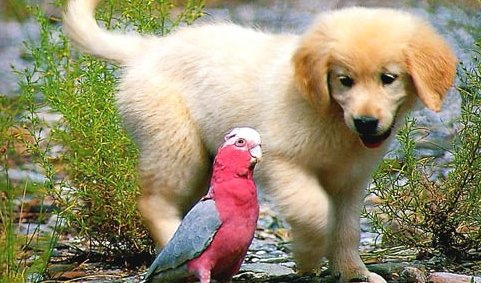
Napoleon escaped and arrived to the forest by a basket with balloons that his human family left unsupervised during a birthday party. Once in the bush, he meets a galah (pink cockatoo) named “Birdo”, who became his mentor. Birdo argues that the forest it’s not a safe place for a domestic puppy and insists that Napoleon must return home. Napoleon, following his young and stubborn temperament, decides to stay and find the wild dogs.

He convinces Birdo to teach him the basic things to survive in the wild. The bird tries to teach him to hunt his prey but Napoleon fails as he doesn’t accept the reality that he needs to kill another creature in order to survive. At the end, the puppy ends eating moss from a rock becoming a type of “vegan” dog.

Birdo is a clear symbol of the different people that we meet in our life teaching us something. Could be your parents, a teacher, a counselor, a sport coach, martial arts sensei or a person from the internet. In addition, the interaction between this feathered mentor and his furry protégé teach us another important lesson about this type of relationship.

In one scene, Birdo disagrees with Napoleon’s intentions to continue his search for the wild dogs. “You don’t understand. You’re a bird, I’m a dog, this is a dogs thing” said Napoleon. The scene concludes with Napoleon saying good bye to Birdo and continue his path in solitude.

The message from this scene is to accept that at one point in our life, we’re going to conclude our relationship with our mentors. And that is a completely natural situation in the life of any human. Maybe you disagree with your mentors about different things and you don’t think they will help you more in your projects. Be grateful, let them go and follow your path.

Facing your fears.

While Napoleon is resting between some bushes , a torrential rainstorm arrives. Napoleon runs for sheltered and found two dingo pups inside a cave. The dogs start barking at him as they think he is a predator.

Napoleon emphasizes that he won’t hurt them. Suddenly, the water floods the cave and sweep one of the pups away. The other dingo is not strong enough to rescue its sister, so Napoleon doesn’t have a choice but to dives in and rescue her. After some dramatic moments, he rescued the pup and the storm ends. Then, Napoleon sees a big dog in the entrance of the cave, “That’s our mum!” one of the dogs said, Napoleon found a wonderful surprise, finally he has found the wild dogs!

There are different circumstances in life when you need to face your fears. I know, it sounds cliché, but it’s true. Hopefully, you will not be in a situation like Napoleon’s where you need to save another creature. However, everyday there are things in life that you know are good for you but you’re afraid to do. Fear will be there, it’s a natural response from our bodies but you need to remember that you are a strong ape, capable to do incredible things. So, feel the fear and do it anyway! (Jeffers, 2012).

The deep analysis.

The dingo mother agrees to let him live with them, as a way of reward for saving her cubs. One morning, the mother and Napoleon went out for a walk. She starts asking about his life , his mother and why he ran away from home. He answers that he wanted to become wild, so he can be very brave and fearless. The Dingo wisely responds:

“But, you have been that all along. You couldn’t had come this far without being fearless. And it was your bravery that saved Cid and Nancy. In your heart, you have been a wild dog all along, Napoleon”

Due to our domesticated life, we forget how hard and strong we are. Our hunter-gatherer ancestors resisted and faced different dangers and survived. Just as wild dogs live in Napoleon’s heart, humans need to remember that we are strong primates, descendants of vigorous and brave hunter-gatherers ancestors.

Napoleon, accepted his wild essence and discovered his inner power. He understood that he was brave and strong due to facing his fears and helping others. After the conversation with the Dingo, he decided to return home.

Returning to “the mother”.

Napoleon reached the coast by the help of a kangaroo, acquaintance of the dingo mother. Once there, Birdo reappears with a sea turtle who takes Napoleon back to Sydney. He reencounter his mother whom consents to calling him Napoleon instead of Muffin, as a way to recognize that her puppy is an adult.

The symbolism that I found here is not only to remember that it doesn’t matter how old you are, if you still have your parents, it’s completely benign to find guidance from them when things in your life are not good. But also, it’s a way to remember that we are organic creatures and we can accept our animal reality and return to mother nature every time that we are exhausted from civilization.

Returning to mother nature means that if you are feeling exhausted from your work or study, stop, and have a good sleep. If you are eating a lot of junk food, stop, and have fruits and veggies. If you are drinking a lot of soft drinks, stop, and have more water. If you’re feeling drained, stop, and do some meditation. If you’re feeling lonely, talk with people you love. Remember, you’re part of the nature, before go outside to “hug trees” start with taking care of yourself!

When Napoleon was returning to the coast after his encounter with the dingoes, he adopted a new title “Napoleon, the wild house pet” , as a way to accept that he is domesticated but he is still capable to be wild. For humans, returning to the mother means that you can continue living in the civilized world but you have the capacity to reconnect with your animal reality when you need a break.

A great movie for kids and adults!

To conclude, “Napoleon” is a great film to show kids the beauty of the Australian fauna and parents can explain to their children the messages from Napoleon’s adventure and how these are related to our life as a humans. Without mention that the scenery of Australian landscapes make this movie extremely enjoyable to watch.

References.

Andreacchio, M (Director) (1995) Napoleon [Film] Roger Dowling.

Harari, Y. N. (2014) Sapiens. A brief history of humankind. Penguin Random House.

Jeffers, S. (2012) Feel the fear and do it anyway. Vermillon.

Moris Animal Foundation (March 19,2020). From wolves to pugs & great Danes- The evolution of Man’s best friend. [Online] https://www.morrisanimalfoundation.org/article/evolution-of-dogs
Fantasize is beneficial, as long as you know that you’re fantasizing.

In the past, some psychologists saw fantasies as something negative. Something that all patients should avoid in order to have a balanced life. However, today we know that fantasies could be beneficial for your mental health as long as you know that you are fantasizing. This sounds complex but it’s easy to understand. Fantasies (not only sexual but all kind of fictional scenarios in our mind) are essential to take a break from reality and relax from the stress of our normal life. Nevertheless, the key is to understand that those fantasies are just creations of our brain that can help us to relax but we shouldn’t spend too much time fantasizing and stop working in our personal aims in the real world.

The benefits of fantasize.

Portrait of Esther Perel, photo by Karen Harms.

Esther Perel, therapist and author of the best seller “Mating in captivity”, wrote about the new attitude in psychotherapy towards fantasies, she wrote “In my own practice, I’ve come to view fantasy as a valuable imaginative resource, whether it is cultivated by individuals or jointly by couples. The ability to go anywhere in our imagination is a pure expression of individual freedom. It is a creative force that can help us transcend reality. By giving us an occasional escape from a relationship, it serves as a powerful antidote to loss of libido within the relationship. Simply put, love and tenderness are enriched by the spice of imagination” (Perel, 2007).

Perel’s advice is useful not only to understand the benefits of sexual fantasies in relationships but to appreciate the power of our mind to create scenarios that can transcend reality. Fantasies are not only useful to understand our psyche but also to take a little break from reality.

Probably you learnt some meditation techniques where with your eyes closed and deep breaths you needed to imagine that you were walking in a forest or at the beach in order to feel more relaxed. Some people fantasize about other things, like visiting a magical land from a novel or videogame, or dancing under the stars with a famous and good looking actor. Regardless of what fantasy is your predilect, when we use these techniques, we use the power of our mind to be in places where we can feel safe and happier, at least for a couple of minutes. And then we come back to the real world feeling better.

The importance is understand where reality begins.

The biggest fear for a lot of people towards fantasies was that these could lead to permanently lose contact with reality. It is an understandable fear, however we know now that this could be avoidable if we are aware that our fantasies are just briefs escapes from reality and not the real life. A good method to avoid this issue is increase our body awareness. A term which means be aware of our body sensations with the world. Walks in the nature, breathing, yoga, exercise, cold showers are great ways to stay in contact with reality and the present. To conclude, we need to remember that fantasies are not negative if we are intelligent and we always return to the real world by the high sensitivity of our organic bodies.

References

Perel, E. (2007) Mating in Captivity, Unlocking Erotic Intelligence. 1st ed. Harper Collins. New York.

An Evening with Esther Perel (2020) [Online] https://artsandlectures.ucsb.edu/Details.aspx?PerfNum=4136