It was not easy to write this review knowing that the author sadly passed away a couple of months ago. And it was not easy to read her book either.
The book described all the abuse that the author suffered from her childhood to her adolescence, when she was trapped in the circle of slavery created by Epstein and Maxwell. Despite all the horrible anecdotes the author describes, many positive aspects make this book relevant.
First, the author allows us to see the struggles of a victim during her abuse, but also allows us to see the different battles that a person with PTSD suffers. She also reminds us about something fundamental to anyone living with someone with trauma, that most survivors want to have a better life, they want to heal, recover and build a beautiful life surrounded by emotionally healthy people. Finally, Virginia, through her example, showed us that seeking justice can be extremely difficult, especially when dealing with influential people, but that it’s worth fighting for a more peaceful and fair world.
Another aspect of this book that I found meaningful is that its content is a reminder that, as humans, we should care more about the victims and survivors of sexual abuse and other horrendous crimes, and not only talk about the perpetrators. I personally think that, from an evolutionary perspective, it’s understandable that millions of humans use memes and social media posts with the hashtag “Epstein didn’t kill himself” to communicate their disagreement and skepticism towards the final destiny of this criminal.
However, different parts of the book remind us to care more about the victims, and that we should care more about mental health programs in helping people who are survivors of sexual abuse. And that we should care more about supporting civil initiatives, like Virginia’s, to help brave people who didn’t want to remain silent and raised their voice to bring to justice those who perpetuated such horrible crimes.
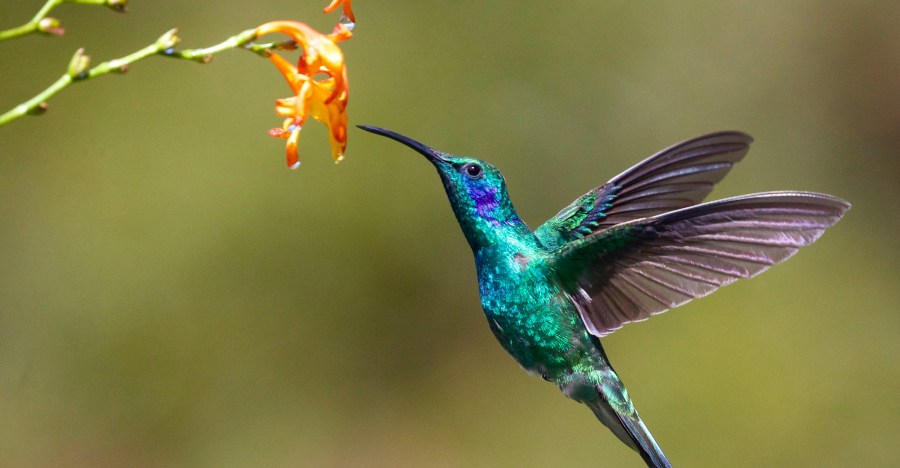
I wanted to avoid any images for this post, but I decided to use an image of a “Tsikiki” the Purepecha word for hummingbird. For the Purepecha, the Indigenous People of Michoacan, my homestate in Mexico, the hummingbird is a symbol of love, hope, prosperity, and a guide that helps people connect with their ancestors. I use the image of this bird as a symbol of the main message that Virginia shares in her book.
Its content can depress you immensely, but at the same time it will give you hope. Hope that among the brutal people are brave humans like Virginia, who decided to seek justice and fight for a fairer world. And that, with her bravery, inspired thousands of victims to do the same and create a safer world for women and their families.
I leave this book on my bookshelf with that message in my mind. Virginia brought hope with her example and her actions. And her legacy will continue to inspire survivors from all over the world. It was not easy to read her book, but it was necessary. Necessary to see the reality of sexual abuse, and that we should talk about it without embarrassment, but with complete maturity, compassion and bravery.
I was reading Mind Magic by clinical professor of neurosurgery at Stanford University, James Doty when I learned about Silvia Vasquez-Lavado’s fascinating story.
Silvia’s life story is one of those examples of the incredible capacity of humans to recover from adversities and become a powerful example of antifragility and perseverance. Silvia became an avid mountaineer, and by 2015, she already climbed Kilimanjaro in Tanzania, Mount Elbrus in Russia, Aconcagua in Argentina and Mount Kosciuszko in Australia. Interestingly, climbing mountains had a profound meaning for Silvia.
I learnt from Doty’s book that Silvia was a victim of childhood sexual abuse during her childhood in Peru, and the silence from her family towards it created a deep emotional and psychological wound on her. These wounds led her to substance abuse, depression and broken relationships with women in her twenties. Which, by the way, had to cover up her sexuality from her family.
Despite all these traumatic episodes, she became successful in high-tech Silicon Valley, a highly male-dominated environment. However, those neglected wounds were still affecting her. Finally, in 2005, her Mother invited her to a ceremony with Ayahuasca in her native Peru. During that ceremony, Silvia had a profound vision in which her younger self appeared to her and called her to walk together in a valley surrounded by mountains. This experience was meaningful and gave her a new sense of purpose.
In 2014, she decided to start a nonprofit called Courageous Girls to empower other young survivors of sexual abuse through mountaineering.
There’s a lot more to learn from Silvia’s inspiring life. I believe that she is an incredible example of a brave woman who, despite all the difficulties that she faced in different facets of her life, was capable of becoming more assertive and wiser. She became an inspiring example for many girls and women who were in similar traumatic situations and showed them that they had the inner power to surpass adversities.
While these lessons were learned during my time in the military, I can assure you that it matters not whether you ever served a day in uniform. Our struggles in this world are similar, and the lessons to overcome those struggles and move forward will apply equally to all
Those are the words of Admiral William H. McRaven during his speech to almost eight thousand students from the University of Texas in 2014. I chose to start this brief article with those words because every day, more people want to improve their lives and mental health by following the advice of wise military men, and still, there are people who keep asking why a civilian should invest time of their life reading a book wrote it by military veterans?
The answer to that predicament is found precisely in the practical and empowering advice of Admiral William H. McRaven, as shared in his engaging book “Make Your Bed.” This book, which I highly recommend, offers a straightforward approach to adopting healthy and necessary habits that can significantly improve our lives on this planet. It’s not just theory, but practical steps that you can take to improve your life. Because of the high popularity of videos on the Internet and literature about self-improvement, many authors encourage people to make their bed as their first task to complete at the beginning of their daily routines. Admiral McRaven explains the benefits of completing this task in his book. I also found other valuable lessons that harmonize with contemporary psychology to find a more meaningful life with ourselves and the rest of the world.
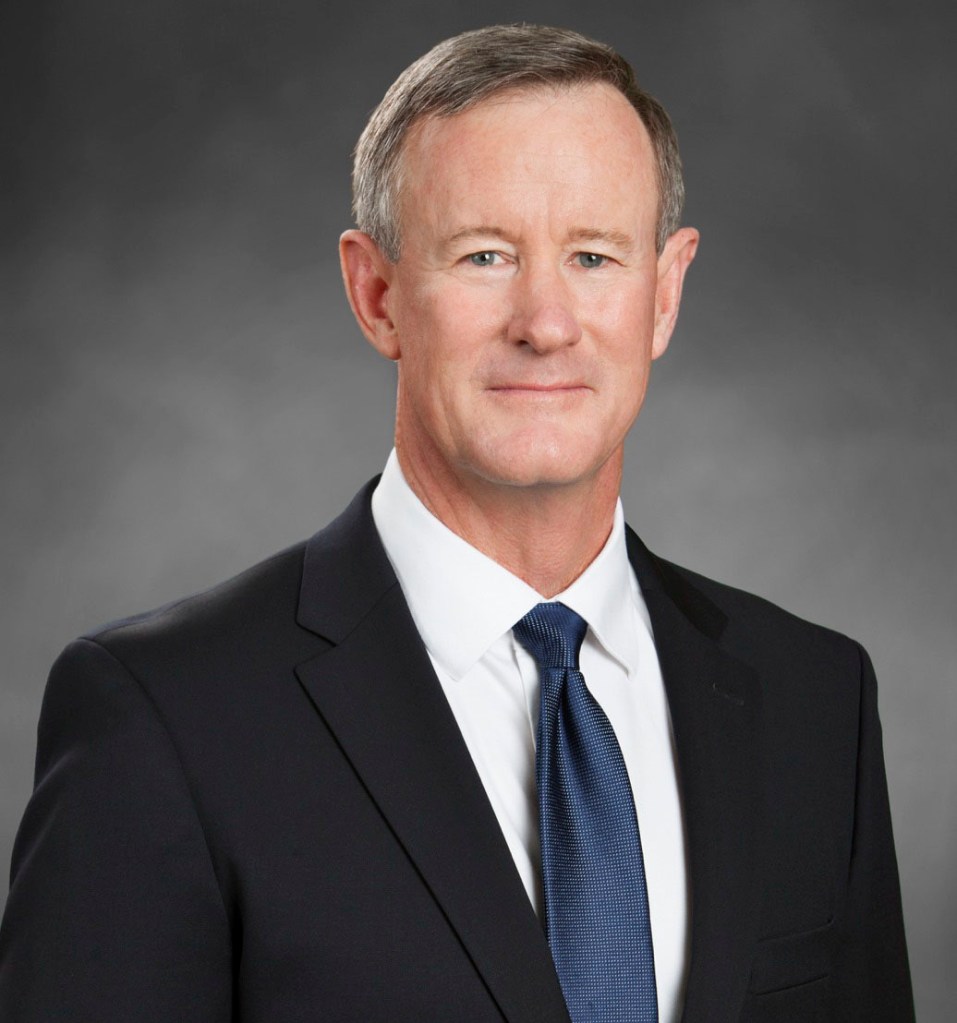
Admiral William McRaven. Photo by The University of Texas at Austin
For example, the author mentions the importance of creating purposeful relationships with other humans. This is an important lesson to remember, as we cannot deny the incredibly high sociability of our species. I also found different lessons that resonate with the concept of Antifragility (a property of systems in which they increase in capability to thrive due to stressors) developed by the author Nassim Nicholas Taleb. Although Admiral McRaven did not mention this concept at all, he gave us exciting examples that remind us that most of the time, we must accept feeling uncomfortable to achieve our aims. It was also emotional and meaningful to read the different stories of brave people he met during his military career. They are perfect examples of how life can throw us the most horrible tragedies, but we decide what kind of attitude we will adopt to face the different calamities we can find as human beings.
To conclude, “Make Your Bed” is a highly recommended book to anyone who wants to enjoy a light but profound reading about the lessons of a man built in the US Navy, but with a wise perspective about the human condition that can be applied to any person who wants to create a better life for themselves, and why not, to create a better world for everybody.
Today, we celebrate the 132th anniversary of the birth of the Russian psychologist and ethologist Nadezhda Nikolaevna Ladygina-Kohts. She was a pioneer in the study of nonhuman animal mind and her investigations demonstrated that cognition and empathy are non exclusively humans and she provided a method that is still in use in contemporary Psychology. This is her story:
Nadezhda Ladygina-Kohts was born in Penza, Russia, on May 18, 1889. Her father was a music teacher and her mum did not have any formal education (Seel, 2012). She finished her study of comparative Psychology at Moscow University in 1917 and became head of the Laboratory of Zoopsychology of the Darwin Museum, which had been founded by her husband, the Russian zoologist Alexander F. Kohts ( Van Rosmalen et, al. 2011).
There, she studied the behaviour of monkeys and apes and published her findings in Russian, German and French. However, it was not until 2002 that her book “Infant Chimpanzee and Human Child” edited by Primatologist and professor in Psychology from Emory University, Frans de Waal, was translated to English.
The chimpanzee Joni.
Ladygina-Kohts most famous feat was to raise the baby chimpanzee named Joni for years and compare the observations of his behaviour with those of her own son Rudi. These observations were published in the book “The chimpanzee child and the human child: their instincts, emotions, play habits and expressive movements”
One of the most important things that Ladygina-Kohts discovered during her observations with Joni was the existence of empathy without language. Every day, Ladygina-Kohts had to deal with his unruly behaviour. She found out that the only way to get Joni off the roof of her house was to appeal to his concern for her. In her book, Infant Chimpanzee and Human child, she wrote:
“If I pretend to be crying, close my eyes, and weep, Yoni immediately stops his plays or any other activities, quickly runs over to me, all excited and shagged, from the most remote places in the house, such as the roof or the ceiling of his cage, from where I could not drive him down despite my persistent calls and entreaties. He hastily runs around me, as if looking for the offender, looking at my face, he tenderly takes my chin in his palm, lightly touches my face with his finger, as though trying to understand what is happening” (De Waal, 2005, p.184).
In these photos, we can see different reactions of Joni towards Ladygina-Kohts’ emotions. Photos shared by Alexey Merkuryevich Gilyarov.
Ladygina-Kohts discovered that we do not need words or complex language in order to feel empathy for someone. A knowledge that is highly used among professionals in Ethology and Psychology nowadays.
Match-to-Sample Paradigm.
Nadia and Joni during one experiement. Darwin Museum Fund.
According to American psychologist Robert Yerkes, there is a good chance that Ladygina-Kohts invented the matching-to-sample (MTS) paradigm, which is widely used nowadays to help people with Autism Spectrum Disorder (De Waal, 2016).
Nadia (diminutive of Nadezhda) would hold up an object for Joni, then hide it among other objects in a sack and let him feel around to find the first one. The test involved two modalities, vision and touch, demanding that Joni make a choice based on his memory of the previously seen model (De Waal, p.97 2016).Interestingly, Ladygina’s studies were not limited to primates but also studied parrots.
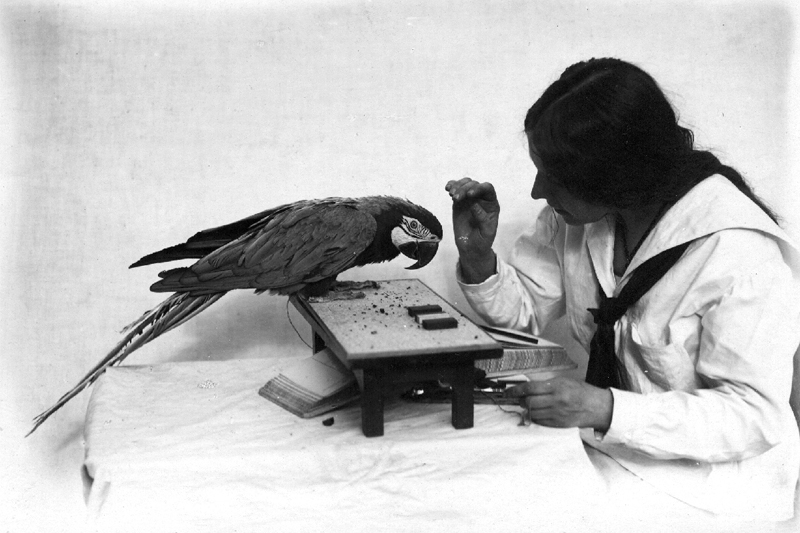
In the photo below, which is part of the photographs at the Darwin Museum, we can see Nadia working with a macaw. The parrot sits opposite her on the table, while Ladygina-Kohts held a small food reward in one hand and a pencil in the other, scoring its choices as she tested its ability to discriminate among objects.
Ladygina-Koths working with a macaw. Photo shared by Olga Romanovna.
A smart strategy against the Lysenkoism.
Nadia with her husband, the zoologist Aleksandr Kohts.
Ladygina-Kohts is also a great example of bravery. Because her experiments and her work at Darwin Museum with her husband, they were considered dangerous against the ideas of the most powerful Soviet politicians. Under the influence of the would-be geneticist Trofim Lysenko (strong proponent of Lamarckism and author of pseudoscientific ideas termed Lysenkoism), Joseph Stalin had many a brilliant Russian biologist either shot or sent to the Gulag for thinking the wrong thoughts.
Lysenko believed that plants and animals pass on traits gained during their lifetime. The names of those who disagreed with him became unmentionable, and entire research institutes were closed down. Lysenko was distinctly ambivalent about Darwin’s theory, some of which he labeled “reactionary”. To stay away of trouble, Nadia and her husband hid documents and data among their taxidermy collection in the museum basement. Then, wisely put a large statue of the French biologist Jean Baptiste Lamarck at the museum entrance (De Waal, 2016).
Let’s not forget her legacy.
The Kohts Family. Aleksandr and Nadia with their son, Rudy.
Nadezhda Ladygina-Kohts was a pioneer of evolutionary cognition, is much beloved in her country and is widely recognized as the great scientist that she was (De Waal, 2016). However, a lot of people in Western nations studying Psychology still ignore her life and scientific contributions. Was Ladygina-Kohts overlooked by science due to her gender? Or was it her language? Or political censorship?
Frans de Waal, learnt about her by Robert Yerkes’ books, and I learnt about her by de Waal’s literature. I am not comparing myself with these two legends in Psychology and Primatology, but as an interesting fact, Nadezhda is a Slavic name which means “Hope”. Therefore, regardless of the reasons why her name is not well known in most Western faculties of Psychology, I hope with this article I can stimulate the curiosity of readers so they can learn more about the contributions of Ladygina-Kohts and give her the recognition that she deserves as a brave and brilliant scientist.
References.
De Waal, F. (2016). Are we smart enough to know how smart animals are?. W.W. Norton & Company.
Penza Oceanarium (2019). ФЛЭШМОБ К 130-ЛЕТНЕМУ ЮБИЛЕЮ НАДЕЖДЫ НИКОЛАЕВНЫ ЛАДЫГИНОЙ-КОТС. (Flashmob to the 130th anniversary of Nadezhda Ladygina-Kohts) http://oceanpenza.ru/2019/05/12/513/
Seel, M. (2012). Encyclopedia of the sciences of learning. Springer US Publishing.
Timofeev, D. (2016, January 10) Опыты с шимпанзе, работы Надежды Николаевны Ладыгиной-Котс (Experiments with chimpanzees, works by Nadezhda Ladygina-Kohts) [YouTube Video] https://www.youtube.com/watch?v=RKPuotJLvEo
Van Rosmelen, L., Van der Horst, F,. Van der Veer, R. (2011). An unexpected admirer of Ladygina-Kohts. History of Psychology, Vol.14. American Psychological Association.







 Sapiens Lara