Mountains of Courage: The inspiring life of Silvia Vasquez-Lavado.

I was reading Mind Magic by clinical professor of neurosurgery at Stanford University, James Doty when I learned about Silvia Vasquez-Lavado’s fascinating story.

Silvia’s life story is one of those examples of the incredible capacity of humans to recover from adversities and become a powerful example of antifragility and perseverance. Silvia became an avid mountaineer, and by 2015, she already climbed Kilimanjaro in Tanzania, Mount Elbrus in Russia, Aconcagua in Argentina and Mount Kosciuszko in Australia. Interestingly, climbing mountains had a profound meaning for Silvia.

I learnt from Doty’s book that Silvia was a victim of childhood sexual abuse during her childhood in Peru, and the silence from her family towards it created a deep emotional and psychological wound on her. These wounds led her to substance abuse, depression and broken relationships with women in her twenties. Which, by the way, had to cover up her sexuality from her family.

Despite all these traumatic episodes, she became successful in high-tech Silicon Valley, a highly male-dominated environment. However, those neglected wounds were still affecting her. Finally, in 2005, her Mother invited her to a ceremony with Ayahuasca in her native Peru. During that ceremony, Silvia had a profound vision in which her younger self appeared to her and called her to walk together in a valley surrounded by mountains. This experience was meaningful and gave her a new sense of purpose.

In 2014, she decided to start a nonprofit called Courageous Girls to empower other young survivors of sexual abuse through mountaineering.

There’s a lot more to learn from Silvia’s inspiring life. I believe that she is an incredible example of a brave woman who, despite all the difficulties that she faced in different facets of her life, was capable of becoming more assertive and wiser. She became an inspiring example for many girls and women who were in similar traumatic situations and showed them that they had the inner power to surpass adversities.
Book review: Overcoming Trauma through Yoga. The healing power of yoga.

Photo by Hans Vivek.

The first year of the pandemic was the beginning of my yoga journey, and since then I’ve become interested in the benefits of yoga. Now, as a graduate student in psychotherapy, I wanted to learn more about how yoga can help survivors of trauma reconnect with their bodies.

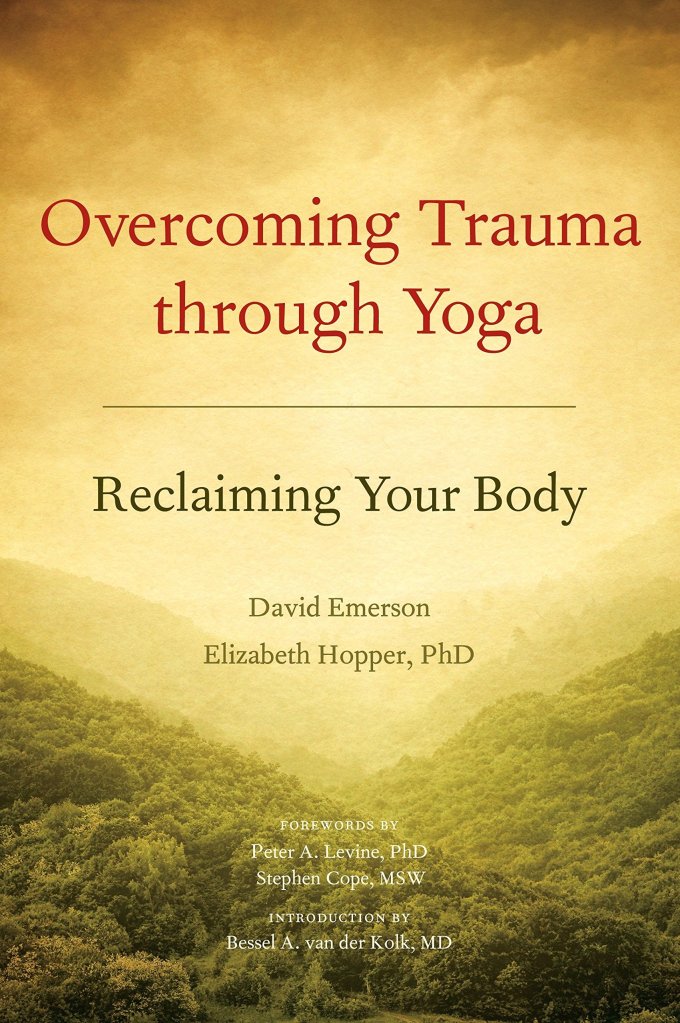
This desire and my wish to improve my life as a survivor myself made me get a copy of the book “The Body Keeps the Score” by Dr. Bessel Van Der Kolk. You can find a review I wrote about this title here. I was astonished to discover that the author wrote extensively about the power of yoga to help survivors heal and reconnect with their bodies. One of the books that Dr. Van Der Kolk recommends to learn more about this topic is called Overcoming Trauma Through Yoga, so I didn´t hesitate to get my copy.

Overcoming Trauma through Yoga.

This book was written by Elizabeth Hopper, a clinical psychologist with more than fourteen years of experience working with survivors. and by David Emerson, a yoga teacher who worked with Dr. Van Der Kolk to create the Trauma Center Yoga Program. The book is ideal for survivors, yoga teachers, and therapists wishing to learn more about Trauma Sensitive Yoga. 

One section of the book that stood out to me was about the importance of yoga teachers providing a safe space free of triggers for their students. Additionally, the authors emphasize the importance of appropriate language while guiding survivors in their yoga studios.

Another chapter of the book that I found fascinating was the guide for therapists to use yoga postures with their clients. This section has photos of different yoga postures that can be useful for therapists who want to include them in their sessions with survivors. The authors also explain in detail how to guide the person in becoming aware of their breath and body sensations. In addition, Emerson and Hopper also encourage readers, therapists, and survivors alike to try the postures by themselves at home so they can register how they feel in each posture.

Photo by Balu Gáspár.

Overall, I think this book is a good option for those hoping to learn more about Trauma yoga. Even though I was uneasy during the first few pages, where the authors discussed the changes in the brains of trauma survivors, in general, it´s an interesting and enjoyable book with plenty of useful information about the power of yoga to help survivors. 

References.

Featured Image by Raimond Klavins on Unsplash.