Book review: Why Buddhism is True by Robert Wright.

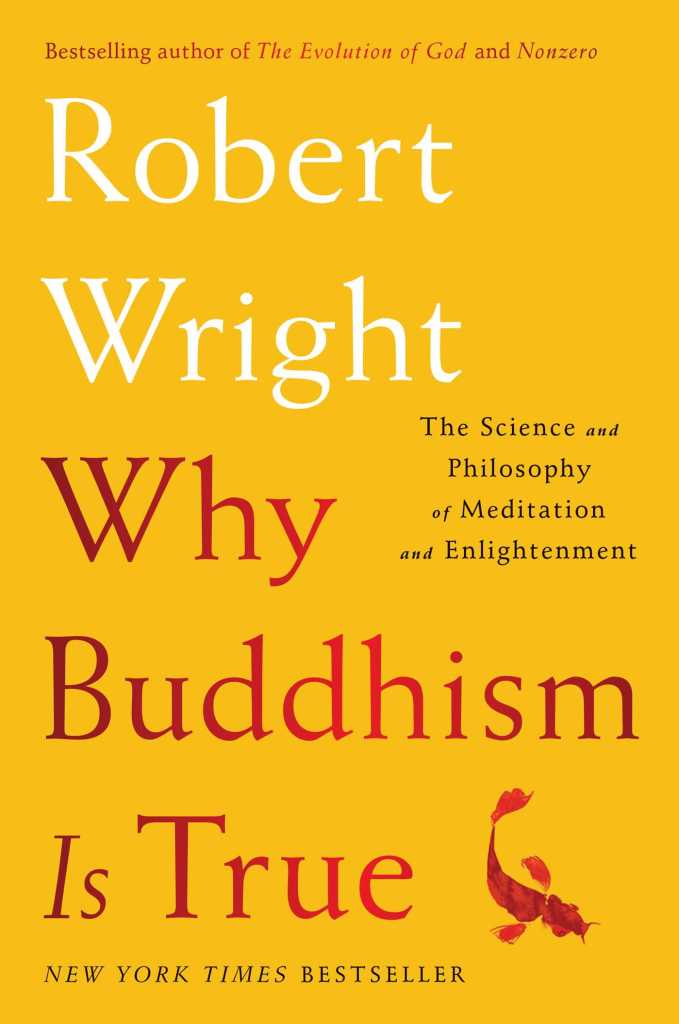
When people asked me which book has impacted me the most, I didn’t know how to respond because many books are meaningful to me and I didn’t want to pick one in particular. However, the content of the book ‘Why Buddhism is true’ by American writer Robert Wright has been so positive in my life that now I do not hesitate to respond that Wright’s book has been one of the most incredible books I’ve read. 

I learned about Robert Wright’s work in Christopher Ryan’s books. Ryan is the co-author of ‘Sex at dawn’ and author of ‘Civilized to death’, where he wrote about one of Wright’s most famous books ‘The moral animal’. Intrigued by the title, I got my copy and since then I became a huge admirer of Wright’s literature.  After I finished ‘The moral animal’, I found out that he had another popular book called ‘Why Buddhism is true’ and as I was starting to become more interested in Buddhism, I decided to also read that one.    

It turned out to be a fascinating book about Buddhism, meditation, and Enlightenment. I’m so grateful to Robert Wright’s talent that decided to write this brief review to motivate anyone interested in discovering the benefits of Vipassana meditation and learn the basics of Buddhism, to get a copy of this inspirational book. 

What makes this book fascinating?

Why Buddhism is true was published in 2017 and the first Simon & Schuster paperback edition was published in May 2018. The author, Robert Wright, is an American journalist who writes about science, religion, history, and politics. As mentioned above, he is also the author of other books such as ‘The moral animal’ (1994), Nonzero: The logic of human destiny (1999), and ‘Evolution of God’ (2009).  

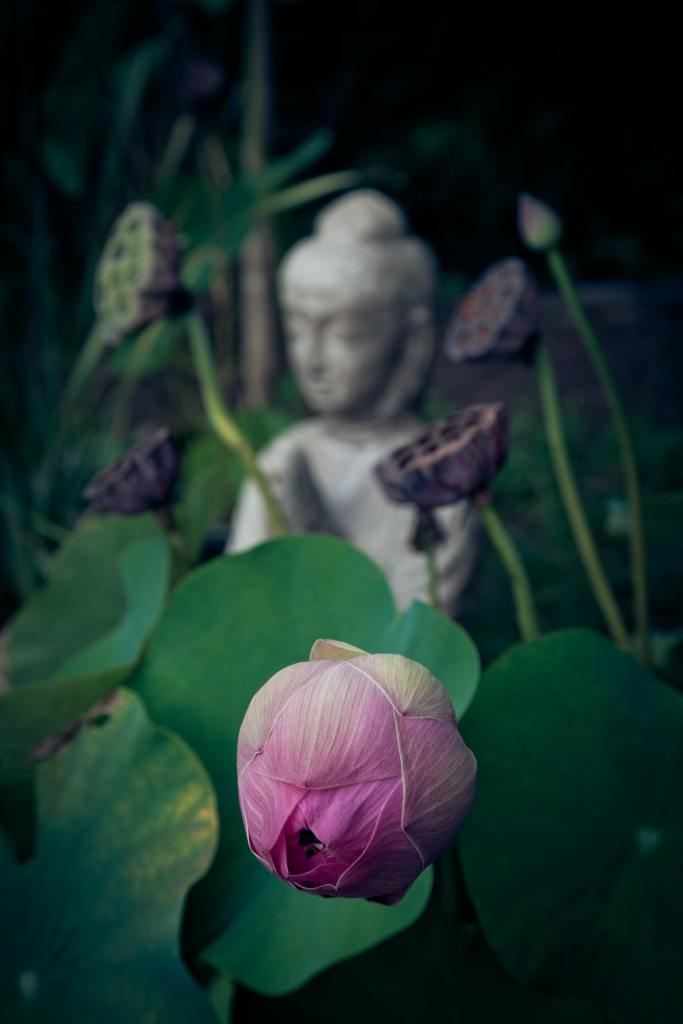
Photo by Saffu.


The book begins with a fascinating analysis of how natural selection has shaped our brains in thousands of years of evolution to behave in certain ways. I liked how he used a famous American film as an analogy to explain the influence of natural selection in our modern lives. Then, Wright writes about the perspectives of Buddhism and modern psychology on human emotions. One of the parts that I most enjoyed was a revolutionary theory about the human brain and how he brilliantly challenge the readers to change our perspective about the idea of the ‘self’.

Another meaningful part of the book was the anecdotes of the author when he met experienced teachers in Buddhism, and how they show us that despite the centuries, the wisdom of the Buddha remains as a path to achieve inner peace. 

Photo by Sarah Ball.

 Personally, this book was important for me because it was my official contact with Buddhism’s history, concepts, and philosophy. The author brightly explains the basics of Buddhism for an audience without or with minimum experience in this religion and philosophical tradition. Finally, I appreciate that the author decided to share his personal experiences meditating, which reflects that he is not only a scholar of meditation but also includes it in his personal life.  

To conclude, ‘Why Buddhism is true’ is a highly recommended reading for anyone who wants to start learning about Buddhism and meditation. The book will also challenge you to reconsider the way you see your mind and how you see the world itself.  

References.

Featured image by RKTKN on Unsplash

“Desiderata” a poem that will make you mentally healthy and wiser.

It is not unusual that some therapists recommend books, essays, even podcasts to help their patients in their process of healing. Poetry in particular, it is another powerful tool that can help people to know more about themselves and life in general.

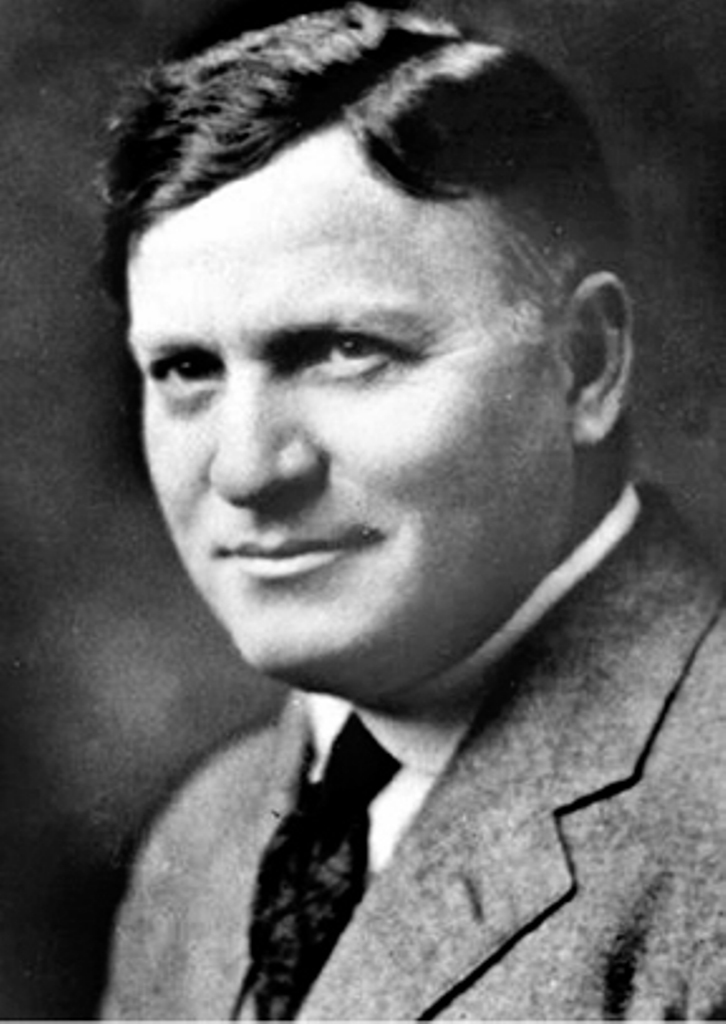
Max Ehrmann, author of “Desiderata”

“Desiderata”, which means “things desired’ is an early 1920s prose poem by the writer Max Ehrmann that can teach people about the reality of the world and also has a powerful message that can help us to live in peace with all the creatures of our environment. These are the main reasons of why you should read every day the poem “Desiderata” to improve your mental wellbeing:

You will remember to be on good terms with everyone.

The poem is a reminder that although we are divided by religion, nationalities, and languages we are in essence part of the same species originated in Africa. Therefore, we should try be in peace with every person that we find in our path without forget that we must be treated with dignity and respect as well.

Everyone has something to teach you

There is one stanza that will remind you that you have the right to express your opinion but also that you must be intellectually brave to listen others’ point of view. Also, that you need to remember that wisdom it is not something exclusive of professors or researchers in Universities, but you can learn also from those without academic education but with a lot of experience in life.

Don’t compare yourself with others.

The constant stimuli from social media had provoked that contemporary Psychologists constantly encourage people to concentrate in their lives only. “Desiderata” will provide you a beautiful advice of how it is important to not compare your life with other humans but to focus all your attention in your aims and existence.

There is still virtuous people out there.

  You will also learn in the poem that it is understandable to be cautious during your normal life, as there are a lot of malicious people who intentionally will hurt you. Nevertheless, do not generalize, because there are a lot of wonderful Sapiens making the world a better place and certainly you can join them and promote love instead of hate.

Remember, you are a child of the universe.

Think about this, you are a brilliant animal with particles in your cells that had existed for millions of years (Sundermier, 2015). The atoms of your body were made in fusion reactions in stars (McMahon, n/d). “Desiderata” will remind you everyday day that you are not so different than other animals or the trees and plants in your surroundings. The poem will be a daily reminder that you need to go outside to seek harmony with your environment, and go inside (by metidation and introspection) to find harmony with yourself.

Do not forget that it is still a beautiful world.

The final stanza will invite you to accept that there are a lot of cruelty and chaos in the world. Nonetheless, you need to be grateful, you need to enjoy the beauty of the simple things in life, because at the end, our planet is still a wonderful place in the universe.

To conclude, I invite you to read the poem, analyze it and feel whatever you need to feel. Joy, anger, sorrow, “Desiderata” is a wise poem that can provoke different emotions, enjoy them, learn from them and I hope you can make this poem a daily or at least a weekly reading so you can enjoy with intensity and wisdom the gift of life.

Complete poem here: https://www.desiderata.com/desiderata.html

References.

Sundermeir, A. (2015) The particle physics of you. Symmetry Magazine.  https://www.symmetrymagazine.org/article/the-particle-physics-of-you

McMahon, D. (n/d) Ask Experts. PhysLink.com. https://www.physlink.com/Education/Askexperts/ae38.cfm

A puppy looking for dingoes in Australia. How a movie for kids can teach adults a valuable lesson.

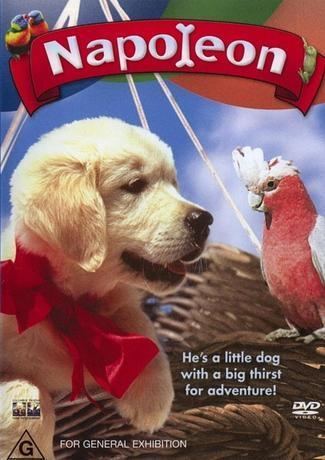
 “Napoleon” is a 1995 film about a Golden Retriever who decided to escape its comfortable life in Sydney, to  search dingoes in the Australian forests and become a wild dog. Although it’s a movie for kids, the plot is full of interesting allegories about human life that adults can find fascinating.

In this article, we are going to explore the wonderful message that the writers Mario Andreacchio, Michael Bourchier and Mark Saltzman gave us in the film.  The article is full of spoilers, so stop reading if you want to watch the movie first. You can find the film here:

https://tubitv.com/movies/448985/napoleon

Looking for freedom and the wild ancestor.

The film begins with a golden retriever puppy named “Muffin” living with a human family and his mum in Sydney, Australia. The puppy is calling himself “Napoleon” as the French emperor due to his wishes to demonstrate that he’s strong and brave. Napoleon wants to escape his comfortable life and live with the wild dogs that he can hear howling at the distance.

The wild dogs howling is a clear allegory of Napoleon’s wild ancestors (Hunter-Gatherers for Humans). Napoleon is a domesticated dog but the howling is a reminder that in essence he is a wild dog, as most researchers in canine genetics agree that dogs are domesticated wolves. (Morris Animal Foundation, 2020). And at the same time, it’s an indirect invitation to reunite with his wild cousins.

Our life as species changed since we adopted agriculture (Harari, 2014), and for us the “howling” of our hunter-gatherer ancestors is clear when we want to go capping, running, practice collective sports, do yoga, hiking, being lazy in the beach, have passionate sex or even escape civilization and live in a cottage or build your own log in the forest.

True, not everyone wants to go and live in the mountains or jungles. However, that “howling” appears every time that our body needs a pause from our domesticated life to get back to our wilderness, to get back to nature, to our organic reality.

The mentor.

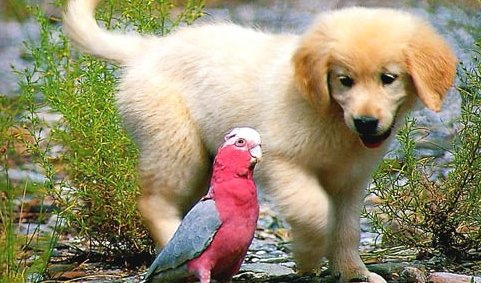
Napoleon escaped and arrived to the forest by a basket with balloons that his human family left unsupervised during a birthday party. Once in the bush, he meets a galah (pink cockatoo) named “Birdo”, who became his mentor. Birdo argues that the forest it’s not a safe place for a domestic puppy and insists that Napoleon must return home. Napoleon, following his young and stubborn temperament, decides to stay and find the wild dogs.

He convinces Birdo to teach him the basic things to survive in the wild. The bird tries to teach him to hunt his prey but Napoleon fails as he doesn’t accept the reality that he needs to kill another creature in order to survive. At the end, the puppy ends eating moss from a rock becoming a type of “vegan” dog.

Birdo is a clear symbol of the different people that we meet in our life teaching us something. Could be your parents, a teacher, a counselor, a sport coach, martial arts sensei or a person from the internet. In addition, the interaction between this feathered mentor and his furry protégé teach us another important lesson about this type of relationship.

In one scene, Birdo disagrees with Napoleon’s intentions to continue his search for the wild dogs. “You don’t understand. You’re a bird, I’m a dog, this is a dogs thing” said Napoleon. The scene concludes with Napoleon saying good bye to Birdo and continue his path in solitude.

The message from this scene is to accept that at one point in our life, we’re going to conclude our relationship with our mentors. And that is a completely natural situation in the life of any human. Maybe you disagree with your mentors about different things and you don’t think they will help you more in your projects. Be grateful, let them go and follow your path.

Facing your fears.

While Napoleon is resting between some bushes , a torrential rainstorm arrives. Napoleon runs for sheltered and found two dingo pups inside a cave. The dogs start barking at him as they think he is a predator.

Napoleon emphasizes that he won’t hurt them. Suddenly, the water floods the cave and sweep one of the pups away. The other dingo is not strong enough to rescue its sister, so Napoleon doesn’t have a choice but to dives in and rescue her. After some dramatic moments, he rescued the pup and the storm ends. Then, Napoleon sees a big dog in the entrance of the cave, “That’s our mum!” one of the dogs said, Napoleon found a wonderful surprise, finally he has found the wild dogs!

There are different circumstances in life when you need to face your fears. I know, it sounds cliché, but it’s true. Hopefully, you will not be in a situation like Napoleon’s where you need to save another creature. However, everyday there are things in life that you know are good for you but you’re afraid to do. Fear will be there, it’s a natural response from our bodies but you need to remember that you are a strong ape, capable to do incredible things. So, feel the fear and do it anyway! (Jeffers, 2012).

The deep analysis.

The dingo mother agrees to let him live with them, as a way of reward for saving her cubs. One morning, the mother and Napoleon went out for a walk. She starts asking about his life , his mother and why he ran away from home. He answers that he wanted to become wild, so he can be very brave and fearless. The Dingo wisely responds:

“But, you have been that all along. You couldn’t had come this far without being fearless. And it was your bravery that saved Cid and Nancy. In your heart, you have been a wild dog all along, Napoleon”

Due to our domesticated life, we forget how hard and strong we are. Our hunter-gatherer ancestors resisted and faced different dangers and survived. Just as wild dogs live in Napoleon’s heart, humans need to remember that we are strong primates, descendants of vigorous and brave hunter-gatherers ancestors.

Napoleon, accepted his wild essence and discovered his inner power. He understood that he was brave and strong due to facing his fears and helping others. After the conversation with the Dingo, he decided to return home.

Returning to “the mother”.

Napoleon reached the coast by the help of a kangaroo, acquaintance of the dingo mother. Once there, Birdo reappears with a sea turtle who takes Napoleon back to Sydney. He reencounter his mother whom consents to calling him Napoleon instead of Muffin, as a way to recognize that her puppy is an adult.

The symbolism that I found here is not only to remember that it doesn’t matter how old you are, if you still have your parents, it’s completely benign to find guidance from them when things in your life are not good. But also, it’s a way to remember that we are organic creatures and we can accept our animal reality and return to mother nature every time that we are exhausted from civilization.

Returning to mother nature means that if you are feeling exhausted from your work or study, stop, and have a good sleep. If you are eating a lot of junk food, stop, and have fruits and veggies. If you are drinking a lot of soft drinks, stop, and have more water. If you’re feeling drained, stop, and do some meditation. If you’re feeling lonely, talk with people you love. Remember, you’re part of the nature, before go outside to “hug trees” start with taking care of yourself!

When Napoleon was returning to the coast after his encounter with the dingoes, he adopted a new title “Napoleon, the wild house pet” , as a way to accept that he is domesticated but he is still capable to be wild. For humans, returning to the mother means that you can continue living in the civilized world but you have the capacity to reconnect with your animal reality when you need a break.

A great movie for kids and adults!

To conclude, “Napoleon” is a great film to show kids the beauty of the Australian fauna and parents can explain to their children the messages from Napoleon’s adventure and how these are related to our life as a humans. Without mention that the scenery of Australian landscapes make this movie extremely enjoyable to watch.

References.

Andreacchio, M (Director) (1995) Napoleon [Film] Roger Dowling.

Harari, Y. N. (2014) Sapiens. A brief history of humankind. Penguin Random House.

Jeffers, S. (2012) Feel the fear and do it anyway. Vermillon.

Moris Animal Foundation (March 19,2020). From wolves to pugs & great Danes- The evolution of Man’s best friend. [Online] https://www.morrisanimalfoundation.org/article/evolution-of-dogs

Your mind is powerful, master it! The inspirational journey of David Goggins.

David Goggins in his early twenties.

David Goggins is a retired Navy Seal and endurance athlete who has competed in more than sixty ultra-marathons. He is one of the best examples of antifragility and how important it is to control the power of our minds. He grew up with an alcoholic and violent father, kids at school used to write racist insults in his Spanish book, he was diagnosed with ADHD and had learning difficulties due to the toxic stress he was suffering. During his early twenties, he was a depressive overweight man with a job cleaning restaurants’ kitchens from cockroaches (Goggins, 2018).

Everything changed when Goggins watched a Discovery Channel documentary called “Class 224” about the intense training of the SEAL candidates. That documentary made him reflect about his own fears and insecurities by watching those men overcoming adversity during that extreme physical and mental training. It was in that moment that Goggins decided to be a Navy SEAL. His journey was not easy. It was full of obstacles, defeats and tragedies, but at the end he achieved his goals and conquered his fears (Rogan, 2018).

From his book”Can’t hurt me” and his appearances in different podcasts, David Goggins is inspiring people from different backgrounds and ages to callous their minds and seek the life they want. Here are some reasons of why David Goggins’ message is so powerful and what we can learn from him.

He is not affraid to share the wounds from his past.

David Goggins is not afraid to share all the awful things that he suffered during his life. Not only because those episodes helped him to calloused his mind and work harder, but also is  way to show his humanity. When he shows the scars from his past, people can see that his life was not perfect, that he was not privileged and that he had to conquered his fears. Showing his humanity allows people to accept their own wounds, their own mistakes, insecurities, fears and start fighting for the life they want.

The challenges from his book will make you growth..and maybe cry.

If you get his book “Can’t hurt me”, you will find challenges after each chapter. Goggins will give you challenges that will make you feel uncomfortable and confront your inner fears. These challenges will be beneficial for you as you will accept the mistakes and defeats from your past, identify what you want to achieve and what things you need to do in order to achieve your aims.

The challenges will make you feel uncomfortable, and yes, maybe you will cry (because it is not easy to confront the painful memories from your past and the fears for your future), but that might precisely what you need to train your mind to face with efficiency and bravery the real challenges in your life.

David Goggins photo by xterraphotos.

Do something that sucks every day.

Every day, you must do something that you hate that you know is good for you. Most people hate cold showers but they do it anyway because it helps their bodies and brains to feel better. Most people dislike do the dishes and clean their houses, but they do it because it is good for your health to keep your place clean and tidy.

You need to suffer a little bit with activities that you hate but are good for you so you can train your brain to keep going and do not quit when things are getting complicated in different life circumstances. The more often you get uncomfortable the stronger you will become and soon you will develop a more productive, can-do dialogue with yourself in stressful situations (Goggins, 2018).

The cookie jar, don’t forget how hard you are!

The cookie jar is a concept created by Goggins as a way to remember our past victories. This strategy is to remember the little victories from your past when you are facing challenging moments and your mind wants to quit. This is a powerful concept because you are remembering triumphs from your own life, at the end this is a personal battle.

Next time that you are training or in a sport competition, studying for a test, working in a project that you need to present to your boss and you start to feel fragile, weak and want to stop. Remember the victories from your past. It doesn’t have to be a big victory either. It can be something small, but when the pain and tiredness hits and tries to stop you short of your goal, dunk your fist in, pull out a cookie, and let it fuel you (Goggins, 2018).

Final thoughts.

There are a lot of things that I want to write about David Goggins but I think you should grab his book and start your own journey of self improvement according to his teachings. There are not magical formulas in his book. It is just pure evidence of a Homo Sapiens that grew up in a hostile environment and instead of playing the victim card, decided to accept the pain of the existence and control the most powerful tool in life, our own mind!

U.S. Navy Seal (ret.) David Goggins courtesey photos.

References.

David Goggins Trail run [Photograph]. by XTERRAPHOTOS. https://sealgrinderpt.com/blog/navy-seal-workout/trail-run-workout-5-22-15.html/attachment/david-goggins-trail-run/

Goggins, D. (2018) Can’t hurt me. Lioncrest Publishing. Bolton, ON

Morning Run. Retired Navy Chief Petty Officer and former Navy SEAL David Goggins poses for a photo before his morning run, a habit he has formed over his years of training and almost never misses. [Photograph] By David Goggins courtesey photos. US Department of Defense. https://www.defense.gov/observe/photo-gallery/igphoto/2002070205/

Rogan, J. (Host). (2018, February 19). Joe Rogan Experience #1080 – David Goggins. [Podcast Episode] Joe Rogan Experience. https://www.youtube.com/watch?v=5tSTk1083VY

Fantasize is beneficial, as long as you know that you’re fantasizing.

In the past, some psychologists saw fantasies as something negative. Something that all patients should avoid in order to have a balanced life. However, today we know that fantasies could be beneficial for your mental health as long as you know that you are fantasizing. This sounds complex but it’s easy to understand. Fantasies (not only sexual but all kind of fictional scenarios in our mind) are essential to take a break from reality and relax from the stress of our normal life. Nevertheless, the key is to understand that those fantasies are just creations of our brain that can help us to relax but we shouldn’t spend too much time fantasizing and stop working in our personal aims in the real world.

The benefits of fantasize.

Portrait of Esther Perel, photo by Karen Harms.

Esther Perel, therapist and author of the best seller “Mating in captivity”, wrote about the new attitude in psychotherapy towards fantasies, she wrote “In my own practice, I’ve come to view fantasy as a valuable imaginative resource, whether it is cultivated by individuals or jointly by couples. The ability to go anywhere in our imagination is a pure expression of individual freedom. It is a creative force that can help us transcend reality. By giving us an occasional escape from a relationship, it serves as a powerful antidote to loss of libido within the relationship. Simply put, love and tenderness are enriched by the spice of imagination” (Perel, 2007).

Perel’s advice is useful not only to understand the benefits of sexual fantasies in relationships but to appreciate the power of our mind to create scenarios that can transcend reality. Fantasies are not only useful to understand our psyche but also to take a little break from reality.

Probably you learnt some meditation techniques where with your eyes closed and deep breaths you needed to imagine that you were walking in a forest or at the beach in order to feel more relaxed. Some people fantasize about other things, like visiting a magical land from a novel or videogame, or dancing under the stars with a famous and good looking actor. Regardless of what fantasy is your predilect, when we use these techniques, we use the power of our mind to be in places where we can feel safe and happier, at least for a couple of minutes. And then we come back to the real world feeling better.

The importance is understand where reality begins.

The biggest fear for a lot of people towards fantasies was that these could lead to permanently lose contact with reality. It is an understandable fear, however we know now that this could be avoidable if we are aware that our fantasies are just briefs escapes from reality and not the real life. A good method to avoid this issue is increase our body awareness. A term which means be aware of our body sensations with the world. Walks in the nature, breathing, yoga, exercise, cold showers are great ways to stay in contact with reality and the present. To conclude, we need to remember that fantasies are not negative if we are intelligent and we always return to the real world by the high sensitivity of our organic bodies.

References

Perel, E. (2007) Mating in Captivity, Unlocking Erotic Intelligence. 1st ed. Harper Collins. New York.

An Evening with Esther Perel (2020) [Online] https://artsandlectures.ucsb.edu/Details.aspx?PerfNum=4136