Watching the crew of Artemis II break down in tears just minutes after surpassing Apollo 13’s record becoming the humans who have traveled farthest from Earth, moved me deeply. We can try to explain the evolution of human emotion, or why we become overwhelmed when we reach something profoundly meaningful. But the truth is simpler and more extraordinary: we are witnessing something entirely new in the evolutionary history of life on Earth.
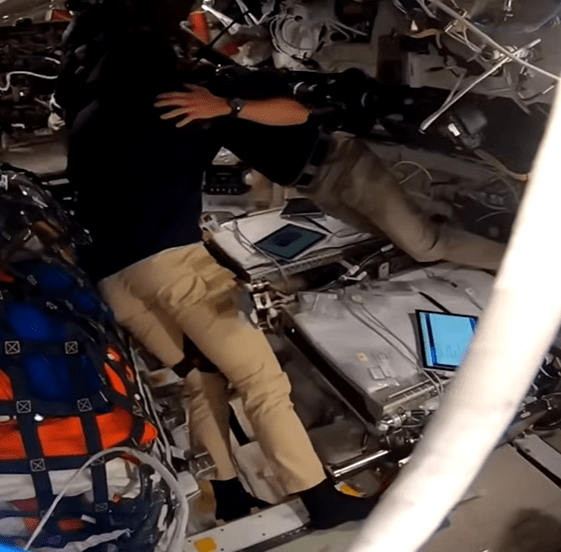
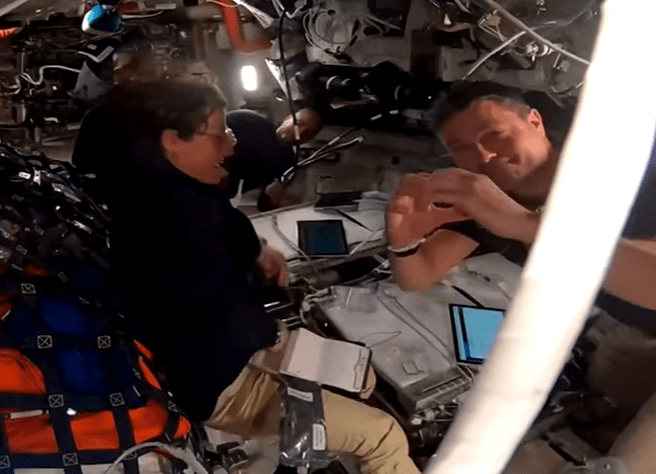
When we heard Commander Wiseman’s voice crack over NASA’s official YouTube broadcast, speaking from inside Orion, it was imposible not to feel the weight of that moment. And seeing the rest of the crew become emotional as well, embracing each other in group hug, was not only fascinating, it was beautiful.
What makes this moment so powerful is that the Artemis II crew may have experienced thoughts that no human being in history has ever had before: the realization of being farther from home than anyone who has ever lived: What were they thinking? what exactly were they feeling? were they thinking about their families, about one particular person, or about the obstacles and sacrifices that brought them to that historic point?
We don’t know yet. We will have to wait until these brave astronauts are ready to tell us what they truly felt in that historic moment. But even without their words, one thing is already clear: simply being that far from Earth, and that close to our natural satellite, is an experience that only a tiny fraction of humanity ever has, or ever will, know. Some might argue that this is not different from what Olympic medalists, Nobel lauretes, or world leaders feel when they reach the summit of their fields. And while those achievemets are undeniably extraordinary, what we are witnessing here belongs to a different category altogether.
This is not only about success, prestige, or recognition. It is about human presence in a place where almost no human has ever been. But it’s also about the living world of Earth extending itself, however briefly, into the silence of deep space. To be suspended in deep space, looking back at Earth while traveling near the Moon, is not simply an achievement, it’s a profoundly new experience for a species shaped by Earth and everything that made its survival possible. And the fact that the rest of us can witness the raw emotional reaction of these four astronauts, in real time, through the power of the Internet, it remarkable in itself.
Artemis II is a major scientific and technological milestone. It will help us better understand the Moon, deep space operations, and the systems that may carry humans (and other species) farther into the cosmos in the years ahead. But it is also opening a new chapter in a subject that may become increasingly important in the decades to come: the emotional and psychological experience of human beings in deep space.
Most of us may never have the priviledge of traveling to the Moon as these astronauts have. At least not yet. But we’re living through a privilege of our own, one of our ancestors only imagined in their dreams: to witness members of our own species brought to tears after becoming the first Homo Sapiens to travel farther from home than anyone before them.
And perhaps that is what makes this moment so moving. Because beyond the engineering, beyond the mission profile, and beyond the history books, what we are really witnessing is not just humanity confronting the immensity of its own existence, but the result of a long evolutionary chain. One that includes not only our species, but the countless forms of life that made our survival possible. This, then, is not solely a human achievement, but part of a broader story: the expansion of life from Earth into space.
 Sapiens Lara