
The first year of the pandemic was the beginning of my yoga journey, and since then I’ve become interested in the benefits of yoga. Now, as a graduate student in psychotherapy, I wanted to learn more about how yoga can help survivors of trauma reconnect with their bodies.
This desire and my wish to improve my life as a survivor myself made me get a copy of the book “The Body Keeps the Score” by Dr. Bessel Van Der Kolk. You can find a review I wrote about this title here. I was astonished to discover that the author wrote extensively about the power of yoga to help survivors heal and reconnect with their bodies. One of the books that Dr. Van Der Kolk recommends to learn more about this topic is called Overcoming Trauma Through Yoga, so I didn´t hesitate to get my copy.
Overcoming Trauma through Yoga.
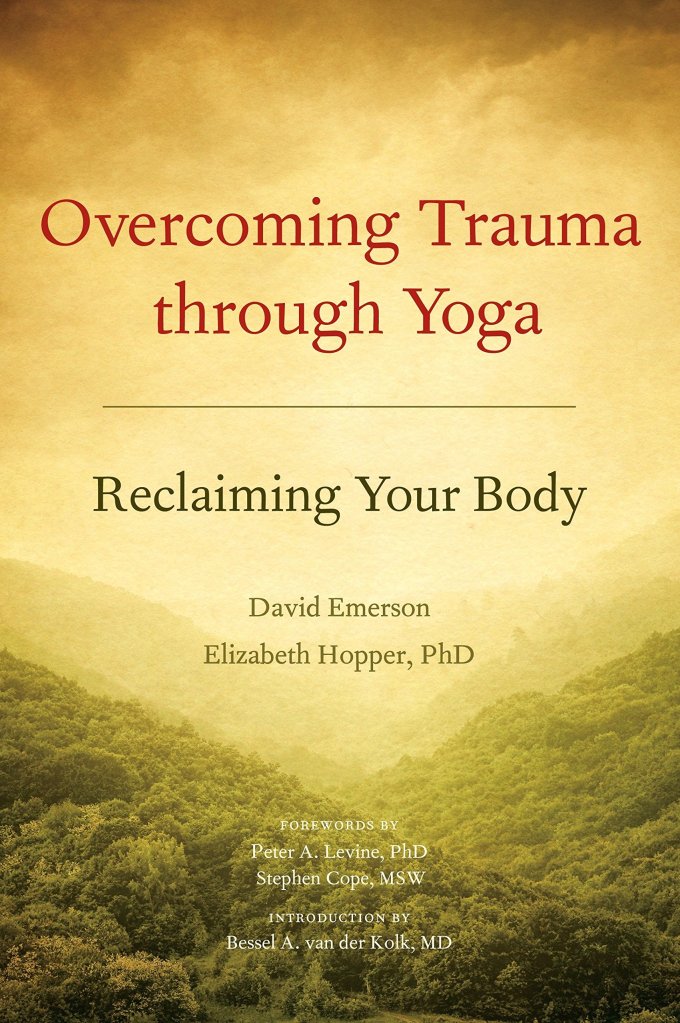
This book was written by Elizabeth Hopper, a clinical psychologist with more than fourteen years of experience working with survivors. and by David Emerson, a yoga teacher who worked with Dr. Van Der Kolk to create the Trauma Center Yoga Program. The book is ideal for survivors, yoga teachers, and therapists wishing to learn more about Trauma Sensitive Yoga.
One section of the book that stood out to me was about the importance of yoga teachers providing a safe space free of triggers for their students. Additionally, the authors emphasize the importance of appropriate language while guiding survivors in their yoga studios.
Another chapter of the book that I found fascinating was the guide for therapists to use yoga postures with their clients. This section has photos of different yoga postures that can be useful for therapists who want to include them in their sessions with survivors. The authors also explain in detail how to guide the person in becoming aware of their breath and body sensations. In addition, Emerson and Hopper also encourage readers, therapists, and survivors alike to try the postures by themselves at home so they can register how they feel in each posture.

Overall, I think this book is a good option for those hoping to learn more about Trauma yoga. Even though I was uneasy during the first few pages, where the authors discussed the changes in the brains of trauma survivors, in general, it´s an interesting and enjoyable book with plenty of useful information about the power of yoga to help survivors.
References.
Featured Image by Raimond Klavins on Unsplash.
 Sapiens Lara