When people asked me which book has impacted me the most, I didn’t know how to respond because many books are meaningful to me and I didn’t want to pick one in particular. However, the content of the book ‘Why Buddhism is true’ by American writer Robert Wright has been so positive in my life that now I do not hesitate to respond that Wright’s book has been one of the most incredible books I’ve read.
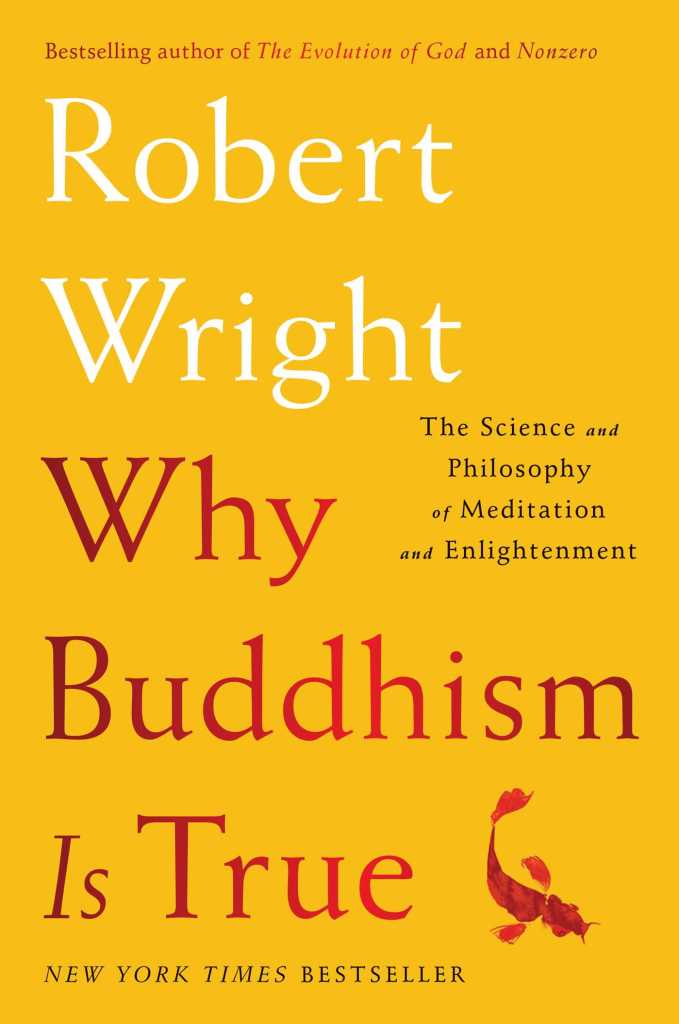
I learned about Robert Wright’s work in Christopher Ryan’s books. Ryan is the co-author of ‘Sex at dawn’ and author of ‘Civilized to death’, where he wrote about one of Wright’s most famous books ‘The moral animal’. Intrigued by the title, I got my copy and since then I became a huge admirer of Wright’s literature. After I finished ‘The moral animal’, I found out that he had another popular book called ‘Why Buddhism is true’ and as I was starting to become more interested in Buddhism, I decided to also read that one.
It turned out to be a fascinating book about Buddhism, meditation, and Enlightenment. I’m so grateful to Robert Wright’s talent that decided to write this brief review to motivate anyone interested in discovering the benefits of Vipassana meditation and learn the basics of Buddhism, to get a copy of this inspirational book.
What makes this book fascinating?
Why Buddhism is true was published in 2017 and the first Simon & Schuster paperback edition was published in May 2018. The author, Robert Wright, is an American journalist who writes about science, religion, history, and politics. As mentioned above, he is also the author of other books such as ‘The moral animal’ (1994), Nonzero: The logic of human destiny (1999), and ‘Evolution of God’ (2009).

The book begins with a fascinating analysis of how natural selection has shaped our brains in thousands of years of evolution to behave in certain ways. I liked how he used a famous American film as an analogy to explain the influence of natural selection in our modern lives. Then, Wright writes about the perspectives of Buddhism and modern psychology on human emotions. One of the parts that I most enjoyed was a revolutionary theory about the human brain and how he brilliantly challenge the readers to change our perspective about the idea of the ‘self’.
Another meaningful part of the book was the anecdotes of the author when he met experienced teachers in Buddhism, and how they show us that despite the centuries, the wisdom of the Buddha remains as a path to achieve inner peace.

Personally, this book was important for me because it was my official contact with Buddhism’s history, concepts, and philosophy. The author brightly explains the basics of Buddhism for an audience without or with minimum experience in this religion and philosophical tradition. Finally, I appreciate that the author decided to share his personal experiences meditating, which reflects that he is not only a scholar of meditation but also includes it in his personal life.
To conclude, ‘Why Buddhism is true’ is a highly recommended reading for anyone who wants to start learning about Buddhism and meditation. The book will also challenge you to reconsider the way you see your mind and how you see the world itself.
References.
 Sapiens Lara